No number without a source.
Early builds showed star ratings and discount badges. They looked great — and the ratings were random, the “−60%” a difference from an average. One traveller noticing would undo everything the app promises.
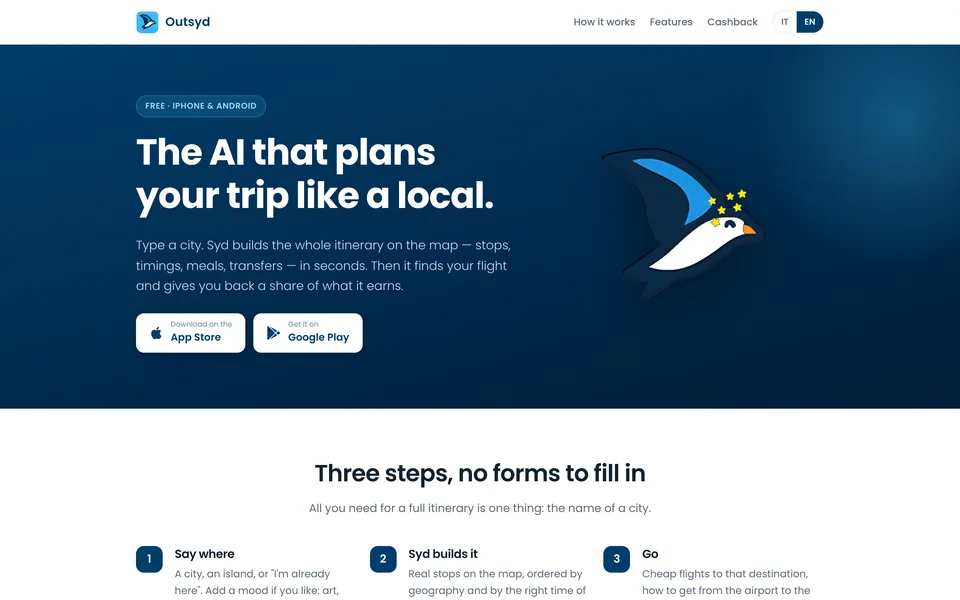
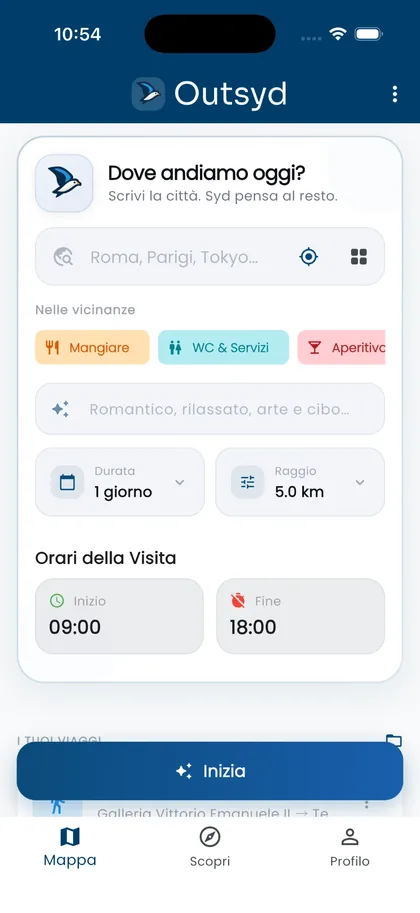
Type a city. Get the day planned — on the map, in seconds.


The ship docks for eight hours in a city you never researched. Now what?
Planning a good day somewhere new means hours of forums, blog posts and map tabs: what is worth seeing, in which order, how far apart, when to stop for lunch. Cruise passengers feel it most — every port is a new city with a hard deadline to get back on board.
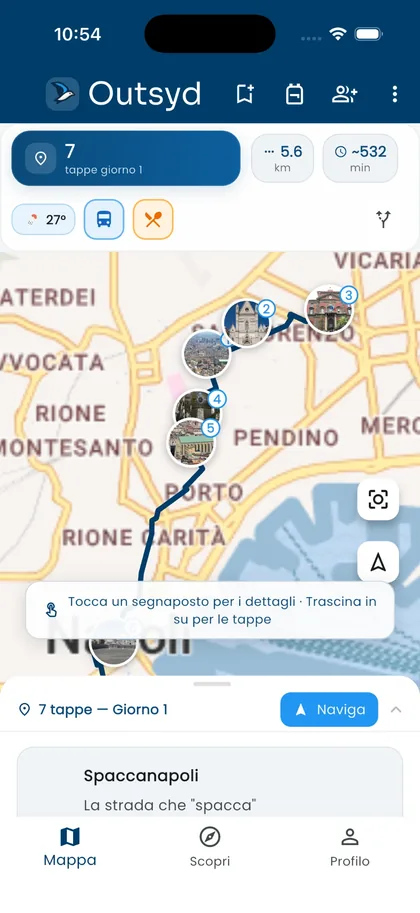
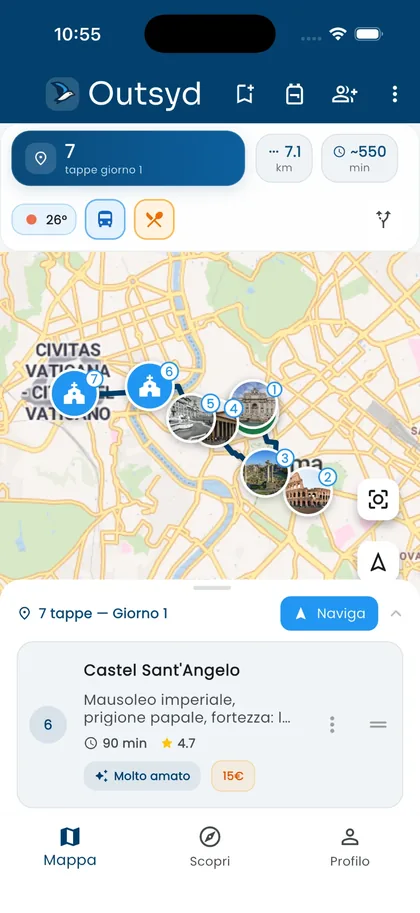
Outsyd does that work in seconds. Name a city, say how long you have and how you’re moving, and the app builds a route on the map: real places, ordered geographically, timed from when you start to when you need to be back, with meals and evening plans in the right gaps.


One Flutter codebase for both platforms, a Firebase backend, and 29 Cloud Functions doing the work the phone shouldn’t.
Anything that costs money, holds a secret or must not be tampered with runs on the server: AI calls, partner APIs, scheduled price checks, cashback accounting, moderation. The app stays a fast, offline-tolerant client with its own map-tile cache.
The hard parts weren’t the features. They were the places where the app could quietly lie to its users.
Early builds showed star ratings and discount badges. They looked great — and the ratings were random, the “−60%” a difference from an average. One traveller noticing would undo everything the app promises.
An LLM finds the exact ticket page for an attraction. Once it cached search?query=None — a page that loads fine and is completely wrong.
Cashback is real money, and a few of its fields were written by the phone. A modified app could have set its own cashback rate and multiplied what it was paid.
Flight links showed zero affiliate clicks for weeks. The code looked correct. The network, it turned out, only counted clicks that went through its own redirect.
Shipping is where the work starts.
Outsyd taught me the parts nobody puts in a tutorial: store review cycles, release notes in two languages within a 500-character limit, privacy policies, affiliate applications, payout logic — and getting people to open the app at all. The TikTok account I run for it has passed a million views, mostly with carousels about where locals actually eat.
Some networks only approve publishers that have a real website, so I built one: a bilingual landing page on Firebase Hosting.

Outsyd became the foundation of my bachelor’s thesis: Outsyd Sentinel, a machine-learning prototype that routes traveller feedback to the right team and reads its sentiment, designed to plug into the app’s existing comments.